


Empowering Students Through Language Proficiency Discussions
As an English learner teacher, one of the most impactful ways to support students’ growth is by openly discussing their English language proficiency. Using a simple form to guide these discussions has been a game-changer in fostering understanding, ownership, and motivation.
What is English Language Proficiency
English language proficiency refers to an individual’s ability to effectively communicate in English across four key domains: listening, speaking, reading, and writing. It encompasses the capacity to understand and use vocabulary and grammar and the ability to navigate social, academic, and professional contexts with confidence.
Proficiency is typically measured along a continuum, from beginner to advanced levels, using standardized assessments like WIDA ACCESS or ACTFL-based evaluations. These assessments provide a structured way to evaluate a student’s linguistic abilities and determine their progress in acquiring the language.
Beyond scores and assessments, English language proficiency represents a student’s ability to engage authentically in diverse situations. It includes understanding cultural nuances, interpreting meaning in different contexts, and applying language skills to real-world tasks. Proficiency is a dynamic process that evolves as learners develop their skills and adapt to new environments. Ultimately, English language proficiency empowers individuals to succeed academically, socially, and professionally, forming a critical foundation for lifelong learning and communication.
How I Use an English Language Proficiency Discussion Form
As an administrator of multilingual learners, I had the opportunity to incorporate language proficiency discussions during my doctoral work at the University of Delaware. I emphasized the importance of discussing English language proficiency with students. Based on findings from my dissertation, I developed a framework that incorporates structured discussions about English language proficiency with students. This framework utilizes a discussion form to facilitate one-on-one conversations, allowing students to better understand their current proficiency levels, set personalized goals, and track their progress over time.
The use of the discussion form has significantly increased student interest in taking the ACCESS test by helping them see the value of their efforts and the tangible milestones they achieve. Additionally, it has enhanced teachers’ ability to engage students in meaningful conversations about language learning, fostering a collaborative and empowering environment.
Here’s how we use proficiency discussion forms and why it works:
- Start with the Basics:
I use a clear, student-friendly form that outlines the four domains of language proficiency: Listening, Speaking, Reading, and Writing. Each domain includes:- The student’s current proficiency level.
- Descriptions of what this level means (e.g., “You can understand short conversations about familiar topics”).
- Specific goals for improvement in each area.
- Reflect Together:
Sit down with students individually to review their scores and explain in simple terms. We discuss:- What they’ve achieved so far.
- What they’re already doing well.
- What their next steps are for growth.
- Set Goals:
Together, set short-term, actionable goals for each domain. For example:- Listening: “Focus on understanding key words during class discussions.”
- Speaking: “Practice asking and answering questions with a classmate.”
- Visualize Progress:
You can include a section where students can track their growth over time. This could be a chart or a progress bar to make improvement visible.
Importance of English Language Proficiency
Discussing language proficiency with students isn’t just about sharing scores, it’s about empowering them. Here’s why this approach works:
- Understanding Their Journey: When students understand their current proficiency levels, they see their progress as part of a bigger picture. They realize that language learning is a journey, and every step forward matters.
- Building Confidence: Highlighting strengths gives students a sense of accomplishment, making them more confident in their abilities.
- Ownership of Learning: Setting goals with students gives them a sense of control and responsibility for their own growth.
- Encouraging Effort: When students see their efforts leading to measurable progress, they’re more motivated to try harder, especially when preparing for proficiency tests.
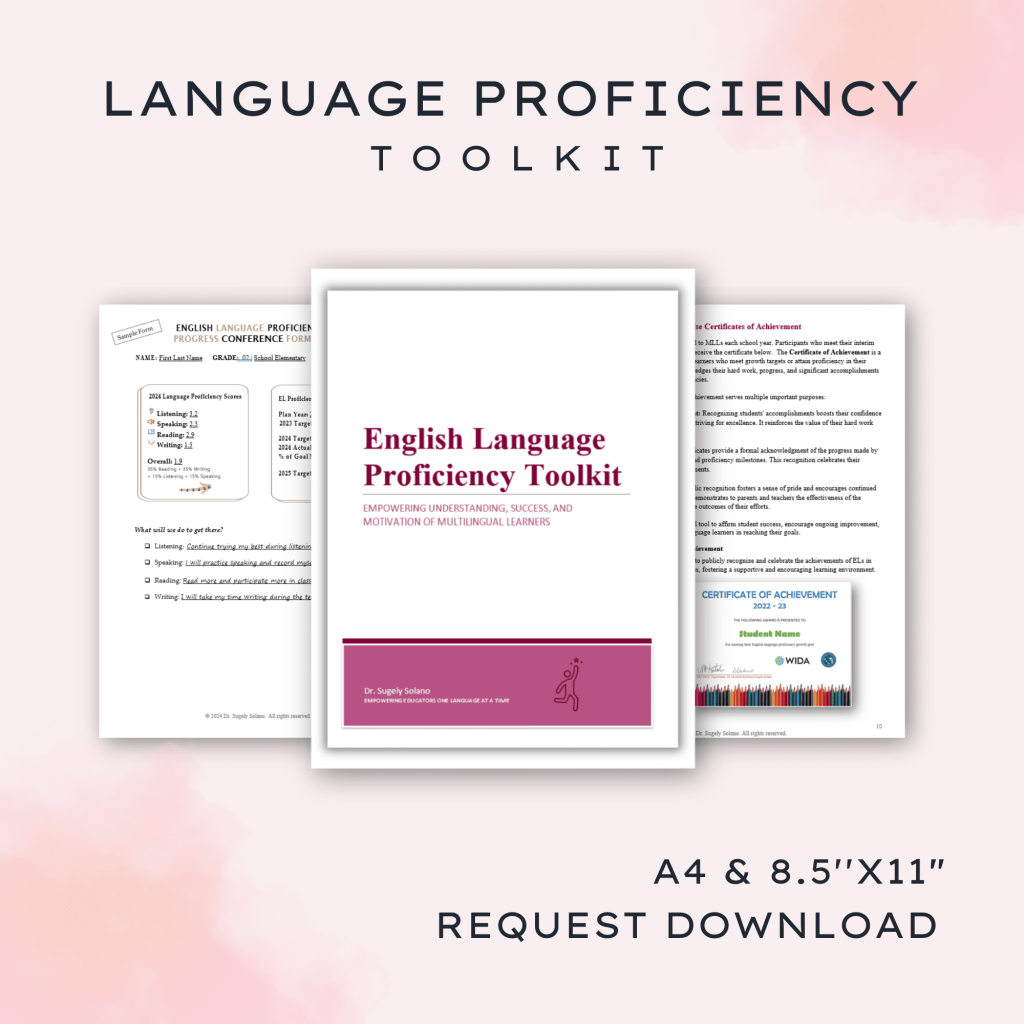
Teachers’ ability to celebrate English language proficiency growth sends an important message to students which ultimately helps improve language proficiency testing. To support educators in implementing these strategies, I created the English Language Proficiency Toolkit, a comprehensive resource designed to guide teachers in fostering language growth. The toolkit includes practical tools, templates, and strategies for discussing proficiency, tracking progress, and celebrating milestones. I encourage teachers to explore this resource to enhance their instructional practices and support students effectively.
How This Impacts Test Performance
When students feel informed and involved in their learning process, they approach tests with confidence. They know what is expected of them, which areas they need to improve, and how to achieve their goals. This reduces test anxiety and encourages a growth mindset, ultimately leading to better performance.
Try It in Your Classroom
If you’re looking to make a difference in how your students engage with their language learning journey, start small:
- Create a simple proficiency discussion form.
- Dedicate time to one-on-one conversations.
- Celebrate every step of progress, no matter how small.
Your students will not only feel empowered but also inspired to achieve their best. Together, we can transform how students view language learning from a challenge to an opportunity for growth.
How do you discuss proficiency with your students? Share your tips and ideas in the comments!