

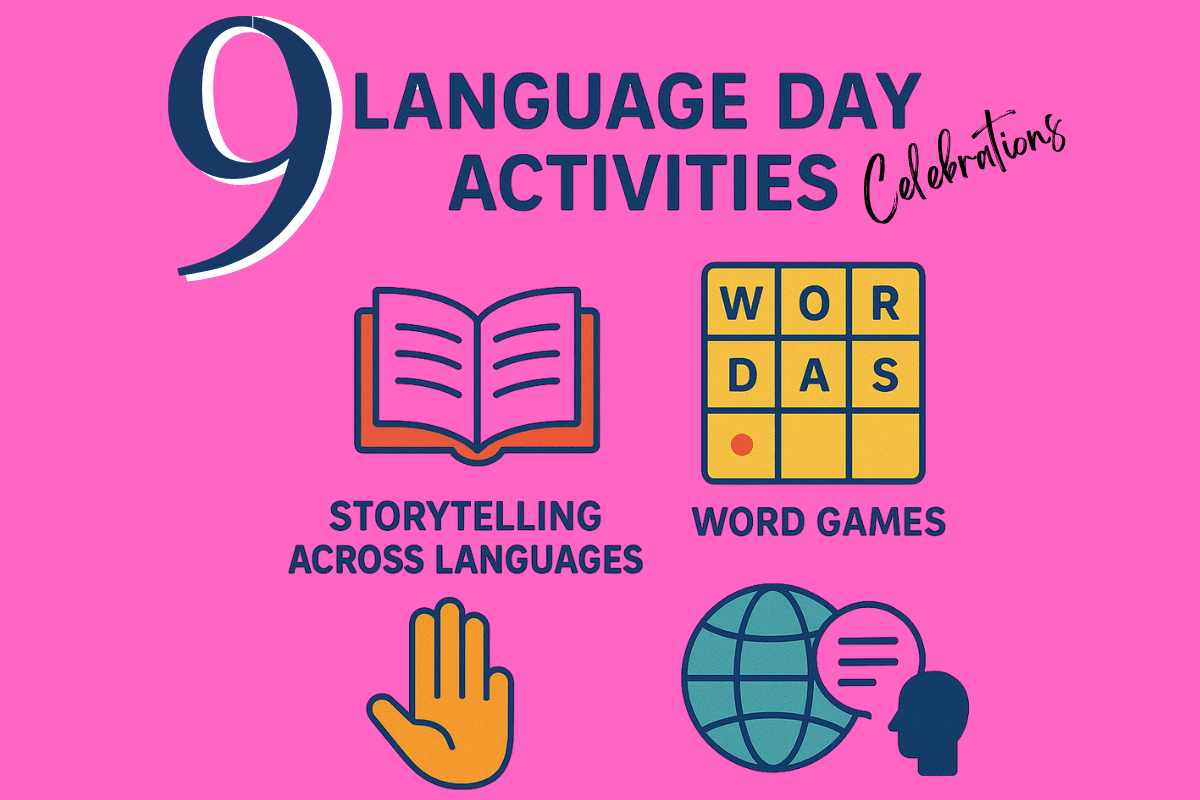
A Day to Honor the Power of Words, Cultures, and Communication
**9 Practical Ideas to Try on Language Day**
Whether you’re a student, educator, or language enthusiast, Language day activities are a perfect opportunity to recognize the rich diversity of languages spoken across the globe and within our communities. Language is more than just words—it connects us, reflects our identities, and opens doors to understanding the world.
My website focuses on providing parents, educators, and leaders how to best support and celebrate language growth. It is part of my doctoral work dissertation, where I focused on discussing and celebrating language proficiency with students. For this reason, in this post I share creative and meaningful ways to celebrate Language Day with students, families, or your school community.
Language is central to identity, communication, and cultural heritage. Globally, we honor this through International Mother Language Day on February 21, a UNESCO initiative that promotes linguistic and cultural diversity. Later in the year, September 23 marks the International Day of Sign Languages, recognizing the importance of sign language in upholding the rights of deaf communities.
The United Nations designates special days to honor each of its six official languages, highlighting their importance in diplomacy, cultural exchange, and global communication.
These include:
- Arabic (December 18)
- Chinese (April 20)
- English (April 23)
- French (March 20)
- Russian (June 6)
- Spanish (April 23)
Schools or community groups can host a Language Week or organize a “UN Language Celebration Session” featuring student-led activities, cultural displays, and multilingual storytelling. These events offer meaningful opportunities to explore the richness of these global languages and reflect on their cultural and historical impact. From playful to powerful, these activities are great for classrooms, assemblies, or family fun:
📚 1. Storytelling Across Languages
Invite students, staff, or family members to share a short story or folktale in their home language—with English subtitles or translations. Highlight the beauty of each language’s rhythm and sounds.
🧠 2. Word Games With a Twist
Play games like Language Bingo, Charades with Multilingual Words, or Match the Greeting using words from various languages. It’s fun and educational!
🖐️ 3. Learn Basic Sign Language
Teach students a few common American Sign Language (ASL) words or phrases—like “thank you,” “friend,” or the alphabet. It’s a powerful way to expand how we communicate and include everyone.
🌎 4. Celebrate the Mother Tongue
Create a “Mother Tongue Wall” where students write a word or phrase in their home language and explain what it means. This honors identity and linguistic heritage.
🗣️ 5. Explore Different Englishes
Discuss how English sounds different around the world—British, Jamaican, Indian, Australian, and more. Play audio clips and talk about slang and dialects to show that there’s no “one right” way to speak English.
🎨 6. Language Art
Have students make flags, posters, or calligraphy art that celebrates a language they speak or are learning. Display their work in a “language gallery.”
🎶 7. Sing in Another Language
Choose a simple song in a different language—like a children’s rhyme or welcome song—and teach it as a group. Music helps language come alive!
📸 8. Photo Booth With Language Props
Set up a celebration photo station with signs in different languages, flags, and speech bubbles that say “Hello!” in various languages.
🗣️9. Learn Something About Each Other Language
Create an activity where students learn a word about each other language or a learn about each other language. Select a different word each year to explore, have students share a verse commonly used in their language, or a phrase.
Why It Matters
Celebrating Language Day isn’t just fun—it sends a strong message that every language counts and every voice matters. Whether someone speaks one language or five, signs instead of speaks, or is just starting to learn a new language, they all deserve to be celebrated.
💡 Tip: Don’t forget to include families in the celebration! Ask them to share songs, recipes, greetings, or traditions from their heritage.
Let’s use Language Day to build understanding, appreciation, and joy around the languages that connect us all.
-

Embracing Bilingual Education
Facebook Pinterest Email Advocating for English Learners’ Inclusion in Bilingual Programs My experience of learning English as a second language has profoundly impacted my perspective as an educator. I consider this experience a valuable asset that has greatly influenced my personal life and professional work in education. Today, I am proud to acknowledge that my…
-

Holiday Celebrations Around the World
Celebrate the Season: Exploring the Diverse Holiday Traditions The holiday season is a time of joy, togetherness, and the celebration of diverse cultural traditions from around the world. It’s a time when families and communities come together to share their customs, stories, religious holidays, and festive rituals. In this blog post, we’ll journey through unique…
-

Supporting Your Bilingual Quiz
Are You Supporting Your Bilingual Child Effectively? Welcome dear parents! Every child’s journey to multilingualism is unique, and as parents, we want to do our best to support them. But how effective are your efforts? Are there other ways you could help your child thrive in their multilingual journey!? 🔍 I am excited to share…
-

Benefits of Learning Another Language
Are you considering learning another language but don’t know if you should? Are you unsure why you should learn a second or third language? Do you ever wonder what you might get out of it? Most of us know that learning a new language is not easy but that learning another language comes with many…
-

Factors that Influence Second Language Acquisition
Language learners should be aware of specific factors that influence bilingualism and language acquisition. Generally, there are two main types of language learners. The first type is the individual who actively seeks to become bilingual or to learn another language for personal, professional, or academic reasons. These learners are motivated by the desire to communicate…
-

Favorite Spanish Kids Books
A collection of recommended Spanish books that help foster reading skills Look no further if you are looking for Spanish favorites to engage your child in reading. This list provides a list of books that your child would love to read over and over again. These books are available in Spanish kid’s books at amazon.com.…
-

The Power of Pronouncing Names Correctly
9 Practical Strategies for Educators Connecting with students is an important part of teaching in K-12 classrooms. Students feel better when they know that their teacher cares. Teachers can show students they care by paying attention to student name pronunciation. Understanding that a student’s name is part of their identity is important for teaching all…
-

How to Plan a Successful ESL Teacher Book Study
How to Plan a Successful ESL Teacher Book Study Becoming an excellent ESL teacher entails continuous learning and growing as an educator of English language learners. A top-notch ESL teacher must be able to teach students in small groups and individually, collaborate, and offer professional development for an entire school. Leading ESL book studies is one way to improve and become great advocates. Over…
-

5 ESL Teacher Books that Make Great Book Studies
Educators of multilingual learners have multiple responsibilities to carry, and one of these is continuous professional learning. To keep up with these responsibilities, teachers must continue learning and growing as professionals in the educational field. As educators, we often find ourselves looking for the best books for ESL teachers to enhance our ability to provide…
-

Benefits of Reading to Your Child
How to support your child’s reading development Numerous studies show why reading is important for children and the adverse effects of not reading to your child. Some argue that reading can begin before a child is born. Unfortunately, not every parent knows the importance of reading to their kids. As a parent, I wish I had…
-

Heritage Language is a Valuable Asset
Does your child speak a language other than English at home? Does your child receive schooling primarily in English? If yes, congratulations on having a heritage language learner. But have you ever wonder why is cultural heritage important? In the United States, English is the de facto dominant language; thus, any language other than English…
-

How to Use TalkingPoints with Non-English Speakers
Communicate with families and students. Teachers of English language learners often struggle to communicate with non-English speaking students and families. The language barrier is very concerning because families and students often feel frustrated. Luckily, there are several applications available that help bridge that communication gap. Next, I will show you how to use talkingPoints to…
-

Stages of Second Language Acquisition
Learning a second language involves various stages that language learners experience. My experience learning English as a second language involved positive and negative sentiments. For this reason, second language acquisition stages are essential to understanding and recognizing. Many people often discuss the benefits of learning a language, but few can recognize or identify the stages…
-

How to Ace an ESL Teacher Interview
A Guide to Consider Before, During, and After an ESL Teacher Interview Over the years, I have had the opportunity of leading ESL teacher interviews in my school district. I have observed that some teachers interview very well while others struggle to answer specific questions. There are several factors that can make or break an…
-

7 Ways to Practice a Target Language
Language development comes with practice, but for some families, language practice only happens in school. Practicing a target language fosters language proficiency. There are several ways to get kids to practice a language outside the school. Some families participate in dual language immersion programs to allow students to learn multiple languages. School immersion programs allow…
-

Online English Books Accessible at Home
Finding books of the appropriate level can be a challenge for parents. However, reading development depends on the consistent practice of books of the appropriate level. Below, you’ll find a list of websites that offer English books to use online. Kids can read these handy books on their phones, tablets, or computers. Enjoy! Books by…
-

10 Spanish Book Websites to Support Reading at Home
Finding Spanish books can be a challenge when supporting Spanish language learners. There aren’t enough online publishers that focus on publishing Spanish books, making it harder for families to find relevant K-12 Spanish books. Pricing is always a concern because limited availability tends to drive prices up. Cost is not the only concern when finding…
-

Availability of Dual Language Immersion Programs
A Guide to Finding Dual Language Immersion Programs Many families understand the importance of raising bilingual kids and more often now opt to find dual language immersion programs. When searching for schools for their children, families may face difficulty finding a local immersion program in the area. Enrolling your child in a dual language immersion…
-

7 Ways to Practice Spanish
For some families, supporting kids at home to foster their Spanish language development can be difficult if the family members are non-Spanish speakers. Spanish language proficiency comes with practice. There are ways to practice Spanish by exposing children to the language. The purpose of dual language immersion programs is to immerse students in using the…
-

Do bilingual learners take longer? What You Should Know!
Parents and teachers are often concerned about whether bilinguals take longer to show adequate progress in reading or language. It is a valid concern that most people who have not learned more than one language experience the most. My personal experience as an English language learner reminds me of how difficult and time-consuming it is…
-

English Language Learning Programs
Across the United States, most schools use the below 5 English learner programs to teach English language learners. Program models in schools vary depending on staff availability and school-wide resources. Some models are more effective than others and vary from district to district and sometimes from school to school. The type of English language learner…
-

Another Benefit of Being Bilingual
I often find myself reading articles and research addressing the benefits of being bilingual. Today, one of the weekly newsletters I read included the article titled Bilinguals Single Out Second Language While Reading. Let’s discuss one more benefit of Being Bilingual. The article focuses on the results of a cognition study that shows that bilinguals…
-

Content Area Curriculum Review Through an MLL Lens
Using EdReports and their MLL Review Tool to Guide Curriculum Decisions If you are involved in content-area curriculum review or selection, I invite you to take a closer look at the EdReports Multilingual Learner (MLL) Review Tool. This tool can help ensure that the needs of multilingual learners are intentionally considered and integrated into every…
-
Hello World: Say Hello In Different Languages Poster
The linguistic process may begin in the most basic fashion, by uttering a word of greeting, which is hello. Hello in different languages posters can be an interesting and useful tool that introduces children to the world of languages as early as possible, at home and in the classroom. It transforms a dull wall into…