

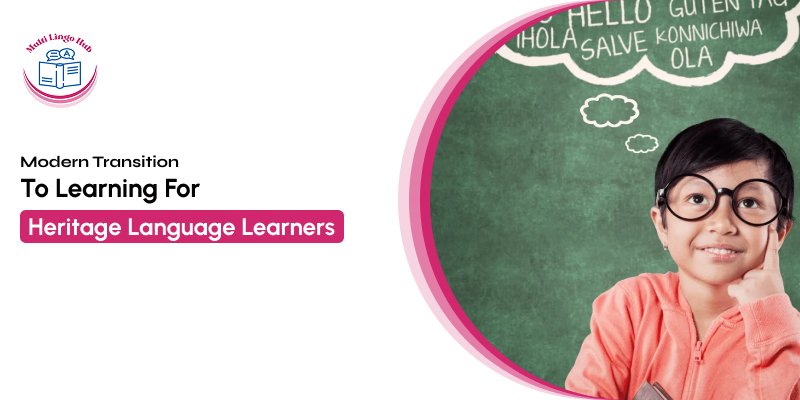
Does your child speak in any other language at home, but is primarily educated in English? Your child is a heritage language learner, then. In the present scenario, this is the situation for many families, and it is linked to opportunities and concerns. The language in relation to a child’s family, culture or community is called a heritage language. It does not seem foreign to them. In the United States, English is the language of learning, and as a result, children tend to lose their mother tongue gradually. However, there is good news. A bilingual person has a great advantage. Some studies show that children who speak more than one language develop better problem-solving skills, have a greater attention span and communicate more effectively than those who speak only one language.
Table of Contents
- Are the heritage language learners losing fluency?
- How can a heritage language learner relearn their roots even faster?
- Do heritage language learners struggle with confidence?
- Do online classes help heritage language learners to improve quickly?
Are the heritage language learners losing fluency?
This is possible, particularly when children are exposed to English most of the time. Even with regular use, a child may know the home language but not speak or read it with much confidence. This is why sticking with things and maintaining consistency at home are big factors.
How can a heritage language learner relearn their roots even faster?
The trick is to have exposure and practice. Simple routines such as speaking at home, watching programs or listening to music in the heritage language can be of help. One of the best ways to establish language and emotional connection is to read books together. Ultimately, language is better learned when it comes to life and not as a subject.
Do heritage language learners struggle with confidence?
Sometimes, yes. Unless children are fluent in their home language or do not see it used by others, they may feel shy about speaking the language. Parental support is very important. Give rewards for even minor achievements and create an environment where the child feels free to express himself and unafraid to make mistakes.
Do online classes help heritage language learners to improve quickly?
The internet has been an influential tool for learners of heritage languages. At Multilingo Hub, we offer structured, highly guided applications with flexible schedules. Regular practice is essential for children to develop their abilities, especially when access to local resources is limited. Appropriate support enables children to develop their ability to read, write, and speak more quickly.
Bottom Line
The heritage language comprises not only language but also includes culture, identity, and connection to family. Although children learn English as their first language from birth, parents and guardians can help them learn their heritage language at home. At Multilingo Hub, we offer strategic solutions exclusively for children, so that being bilingual feels like a blessing rather than a source of self-doubt. Thus, without further ado, connect with us via email contact@multilinghub.com immediately or choose us.
By providing the appropriate type and amount of home assistance, along with access to modern learning tools and technologies, heritage-language-speaking students will be able to gain fluency in both languages and build confidence in their cultural heritage.
FAQs
Who is a heritage language learner?
A child raised at home in a non-dominant language, compared with the language used at school or in society, is considered a heritage language learner.
Will my child get confused because I am teaching her two languages?
No, children can easily acquire several languages and usually gain an advantage in that regard.
Will my child be able to re-achieve fluency?
Yes, your child can enhance fluency over time with practice and proper instructions.