

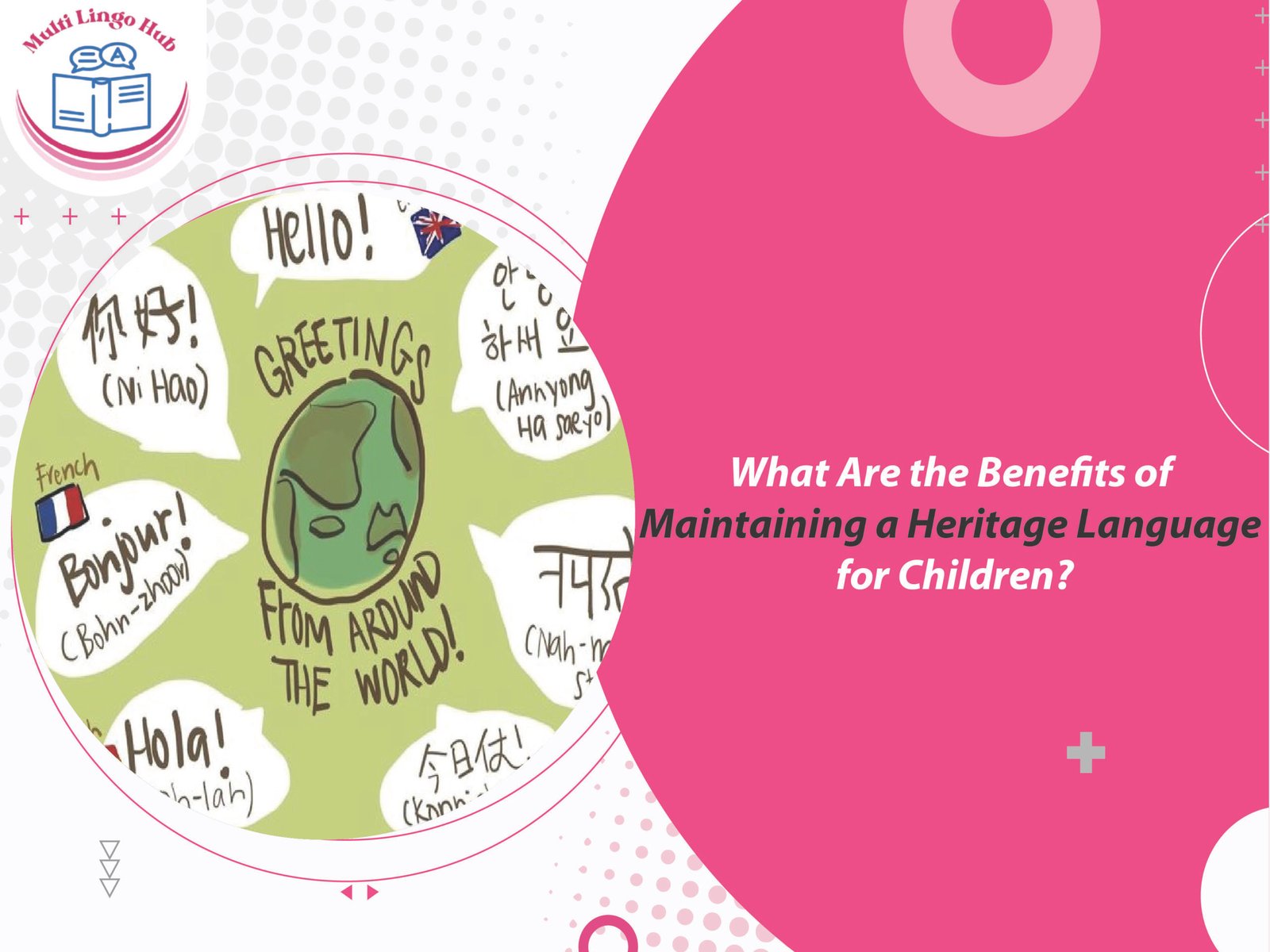
Heritage language isn’t something you just learn—it’s something you carry. It lives in your chest before it lives in your mouth. It’s the voice of your parents calling from another room. The stories your grandparents told over and over, the ones that made you laugh even when you didn’t fully understand. The lullabies that cradled you to sleep.
Even if you spend most of your life in another language, the heritage language is always there. It’s in the smells of the kitchen, in songs you hum quietly, in jokes you never fully get but that still make you smile. It’s tied to memory, identity, and home. You may not speak it perfectly, but it speaks to you.
How Do Heritage Language Learners Connect Emotionally and Culturally to Their Heritage Language?
In 2026, more people than ever will grow up between worlds—between languages, cultures, expectations. Heritage language becomes an anchor. It’s not about grammar or fluency. It’s about belonging. About feeling like you are part of a story that started long before you.
The connection is quiet at first, subtle, almost invisible. It’s in moments you don’t realize are significant until years later:
- Hearing a word and suddenly being transported to your childhood home
- Feeling warmth, humor, or gentle discipline in a parent’s voice
- Laughing at a family joke that only makes sense in that language
- Experiencing a tradition that feels richer when you understand the words
Even learners who barely speak the language feel it. Some emotions belong to the language itself—sadness, joy, longing, nostalgia. You can’t translate them. You feel them.
Culturally, the language gives context. It explains why your aunt tells stories a certain way, why respect or humor is expressed differently in your family. Language doesn’t just carry culture; it is culture. It is what connects you to those who came before and what you carry forward.
What Strategies Can Educators Use to Support Heritage Language Learners in the Classroom?
Heritage language learners bring more than words into the classroom—they bring pride, curiosity, hesitation, and sometimes shame. Some speak confidently at home but feel anxious in public. Others understand everything but struggle to speak.
Educators make a difference when they see learners as people first. Some ways to support them:
- Treat learners’ home language knowledge as a strength, not a deficit
- Allow natural speaking, without overcorrecting
- Use storytelling, family history, and personal experiences in lessons
- Create a safe space where mistakes are expected, accepted, and even celebrated
- Listen to the emotion behind the words, not just the words themselves
When learners feel safe, they open up. They speak. They share. They laugh. Language becomes alive again, not a task or a test.
Benefits of Developing a Heritage Language for Students
The benefits are bigger than words. Students who maintain their heritage language often develop the following –
- Feel more grounded in who they are
- Deepen family bonds
- Move between cultures with ease
- Understand traditions on a deeper level
- Carry pride in their roots
Multilingualism is a practical skill, but the emotional benefits are priceless. Being able to fully speak with family. Understanding stories without translating. Feeling at home in a culture that is yours by blood, even if not always by circumstance.
How Can Digital Tools and Resources Help Learners?
Technology and communities make heritage language alive, accessible, and continuous.
Learners get the following support:
- Hear real conversations every day
- Explore music, podcasts, videos, and stories in the language
- Practice privately, without fear
- Connect with learners worldwide
Cultural festivals, heritage schools, and local groups give students spaces to use the language naturally. Seeing others speak confidently reminds them the language belongs to them too.
How do Families and Communities Help In Heritage Language Acquisition?
When learners see that the language is valued, it feels alive. When families support, learners absorb it naturally. The language becomes more meaningful.
Here’s how they can help-
- Speak the language at home, even imperfectly
- Share stories, jokes
- Celebrate effort, even if it’s small
- Show pride in the language and culture
The bottom line
When learners are supported by patient educators, engaged communities, and loving families, the language doesn’t fade. It grows. It evolves. It connects generations.
In 2026, heritage language learning is more than a skill. It is a lifeline to identity, belonging, and connection. MultilingoHub offers resources to help learners feel confident, rooted, and fully part of their heritage language.
FAQs
- Why is heritage language important?
It connects you to family, culture, and memories—even if you mostly speak another language. - How can teachers help in language learning?
Teachers can help by valuing what learners already know, encouraging speech, and integrating stories and personal experiences in lessons. - How can families and communities help students?
They can speak the language at home, share stories, celebrate effort, and create spaces where learners feel safe to practice.