
7 Mitos Sobre Aprender Español
Respuestas basadas en fortalezas para familias Siempre que conozco familias hispanas cuyos hijos no hablan español, a menudo les pregunto...



To support multilingual learners of English (MLEs), The Center for Applied Linguistics (CAL), TESOL International Association, and WIDA have made the following recommendations for and comments on the 2030 National Assessment of Education Progress (NAEP) Writing Assessment Framework: Anchor the asses…
Read More

If testing (rather than assessment) continues to prevail as what ‘counts’, and schools measure multilingual learners’ progress from only a restricted accountability perspective- that is from score to score- without considering the other purposes, audiences, and contexts for assessment, what ultimate…
Read More
Do you consider it counterintuitive to assess in multiple languages when accountability rests in English? Read this week's blog and submit your answer!
Read More

A get-to-know activity to increase engagement in online synchronous language classes
Read More

As students return to school after a tumultuous year, here are tips to help them re-engage and ease back into the classroom.
Read More

For at least a half-century, there has been a great deal of discussion about how children learn to read. While policymakers, curriculum developers, educational leaders, and those in the media have been using this discussion to drive headlines and policy, reading scientists across the world have been...
Read More

In a recent study published in the journal Science Advances, French researchers examined how bilingual people neurologically process their respective languages in written form. The study carried out by a team of clinical neurologists, neuropsychologists and researchers, and funded by the Agence Nati...
Read More

Advocates say it's both a missed opportunity and discrimination
Read More

Culturally responsive teaching is a powerful way to help students become independent learners, and it can be especially valuable during distance learning.
Read More

A policy brief from the Migration Policy Institute’s National Center on Immigrant Integration Policy finds that despite requirements under federal civil rights law to overcome language barriers, the country’s major early childhood education and care (ECEC) programs often fail to require collection o…
Read More

Do you consider it counterintuitive to assess in multiple languages when accountability rests in English? Read this week’s blog and submit your answer!
Read More

“Literacy has two beginnings: one, in the world, the other, in each person who learns to read and write.”—Margaret MeekThis quote has continued to rewind and repeat in my mind as a more than 50-year research “war” re-emerges to declare to the educational world that science has definitely and univers…
Read More
Bilingual students are becoming more common in U.S. classrooms, and educators should know all the amazing strengths they bring with them. Learn about how the science of reading works for English Learners and how to support them in your classroom.
Read More
For at least a half-century, there has been a great deal of discussion about how children learn to read. While policymakers, curriculum developers, educational leaders, and those in the media have been using this discussion to drive headlines and policy, reading scientists across the world have been…
Read More

Supporting young children’s language and literacy development has long been considered a practice that yields strong readers and writers later in life. The results of the National Early Literacy Panel’s (NELP) six years of scientific research synthesis supports the practice and its role in language…
Read More

Sheila Madji explains what a sentence frame is and how she might use this strategy with ELLs.Check out more Colorin Colorado content at: https://www.colorinc…
Read More

Oral corrective feedback on L2 pronunciation requires teachers to act strategically so that they don’t discourage learners, and contribute to their language development.
Read More

Your students, invigorated by your passion for learning a foreign language and developing cultural competency, move to the foreign country where their target language is spoken, live and study in full immersion, achieve fluency in no time, and become self-actualized global citizens full of empathy a…
Read More
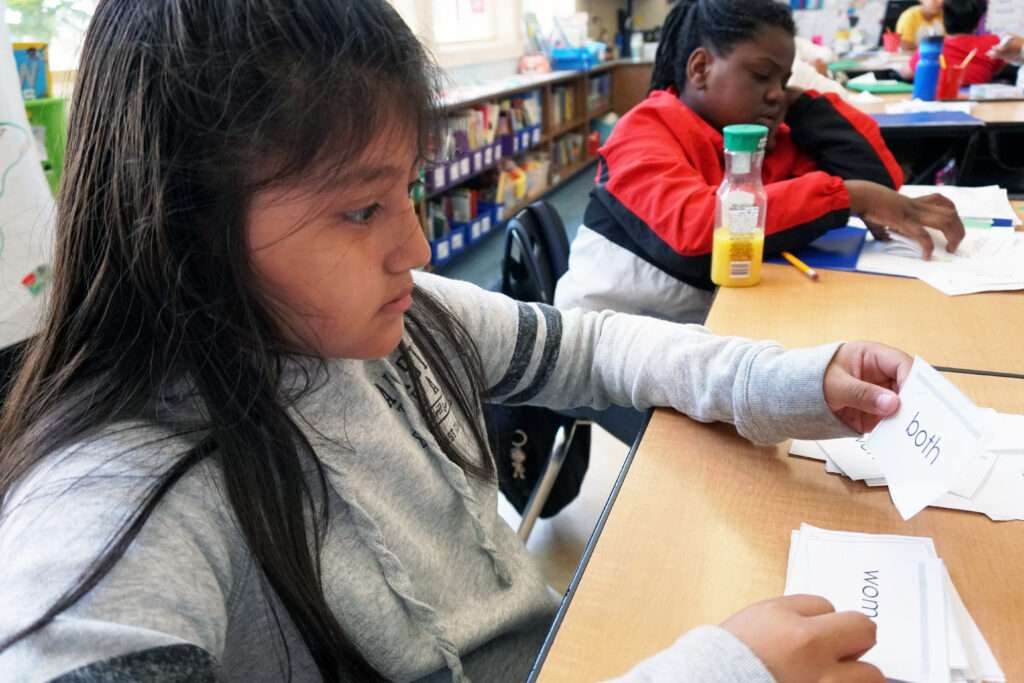
The research shows that both native English speakers and bilingual students who are learning English must learn how to connect the oral sounds in words to the letters that represent those sounds, then connect that connection to the words’ meanings. But, English learners need additional support.
Read More
Respuestas basadas en fortalezas para familias Siempre que conozco familias hispanas cuyos hijos no hablan español, a menudo les pregunto...

Apoyar la educación de nuestros hijos no significa tener todas las respuestas, sino estar presentes, mostrar interés y crear hábitos...

Enseñar inglés en casa puede resultar abrumador, pero con la estructura, la constancia y el ánimo adecuados, se convierte en...